

This reference is for those who want to prepare their own samples for Metals Analysis at the CAIS Plasma Chem Lab. Analytes must be completely dissolved for accurate analysis of solutions by ICP-OES and ICP-MS. The goal of digestion is to dissolve the analytes and to decompose solids while avoiding loss or contamination. Undissolved analytes will not be accurately measured.
The information below can help you determine a dissolution or digestion protocol depending on your sample type and determine which acids to use depending on the elements you want to analyze.
Glass should be avoided wherever possible (it contains metals that can leach out in acidic environments). Plastics (polypropylene, PFA, or PTFE) are recommended. To achieve low background levels and avoid contaminating your samples, it is good practice to use metal-free tubes. Metal-free plastic sample tubes can be obtained from many scientific companies. Alternatively, regular plastic sample tubes can be acid-leached as follows: Tubes are filled with 2% nitric acid and heated for 24 h at 60°C. The tubes are rinsed 3 times with DI water and stored with DI water. Before use, the water is discarded and sample tubes are dried in a clean area.
All acids and reagents used should be trace metal grade or better and sold/stored in plastic bottles. 18 MΩ deionized (DI) water should be used for all dilutions.
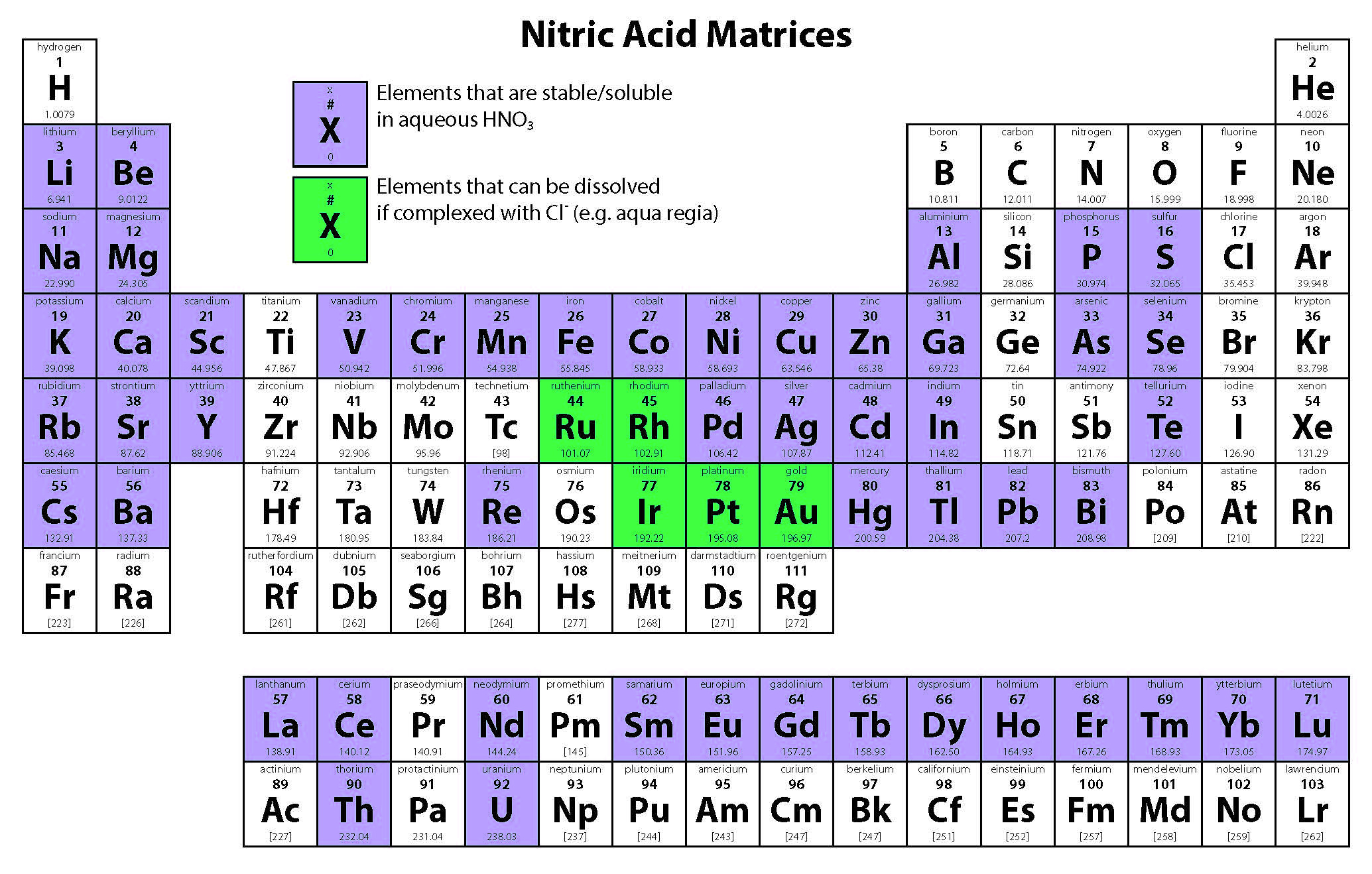
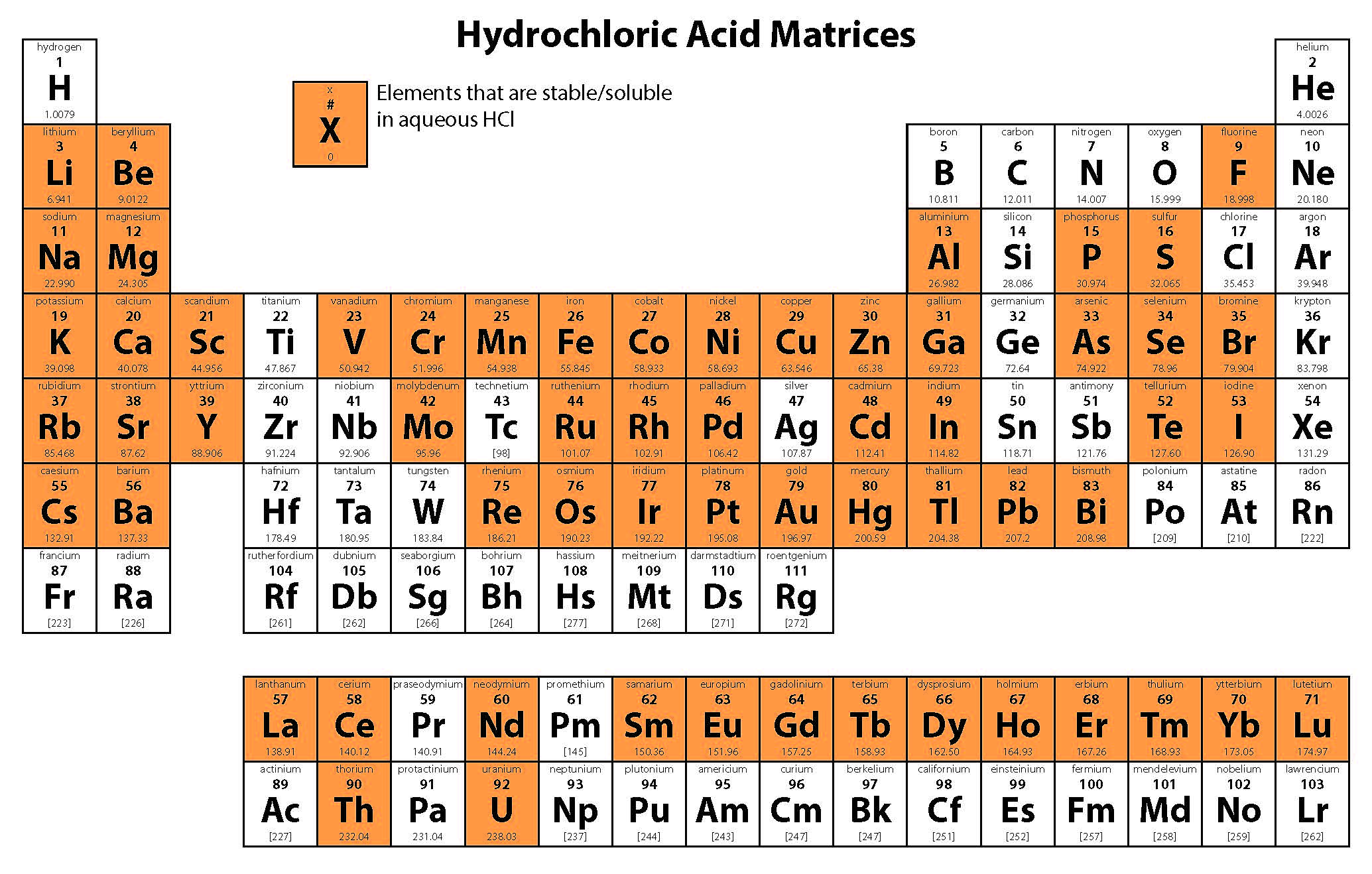
Digestion with nitric acid (HNO3) oxidizes organic matter to CO2 and NO while forming soluble nitrates with most elements, which can then be diluted and analyzed. For metals that do not dissolve in nitric acid (e.g., platinum group elements), hydrochloric acid (HCl) or aqua regia (a mixture of HCl and HNO3) may be required. Hydrogen peroxide (H2O2) or ashing is recommended for removal of organics. Please see the element solubility guide below to determine which acids are required for the elements you want to measure.
Note: when determining acid concentrations, note that concentrated HNO3 is ~67 % w/w and concentrated HCl is ~37% w/w.
Note: we cannot accept samples containing hydrofluoric acid (HF), so if you are digesting your own samples with HF, be sure to evaporate any HF before redissolving in HNO3 or HCl.
Element Solubility Guide
The following tables provide solubility information for various elements:
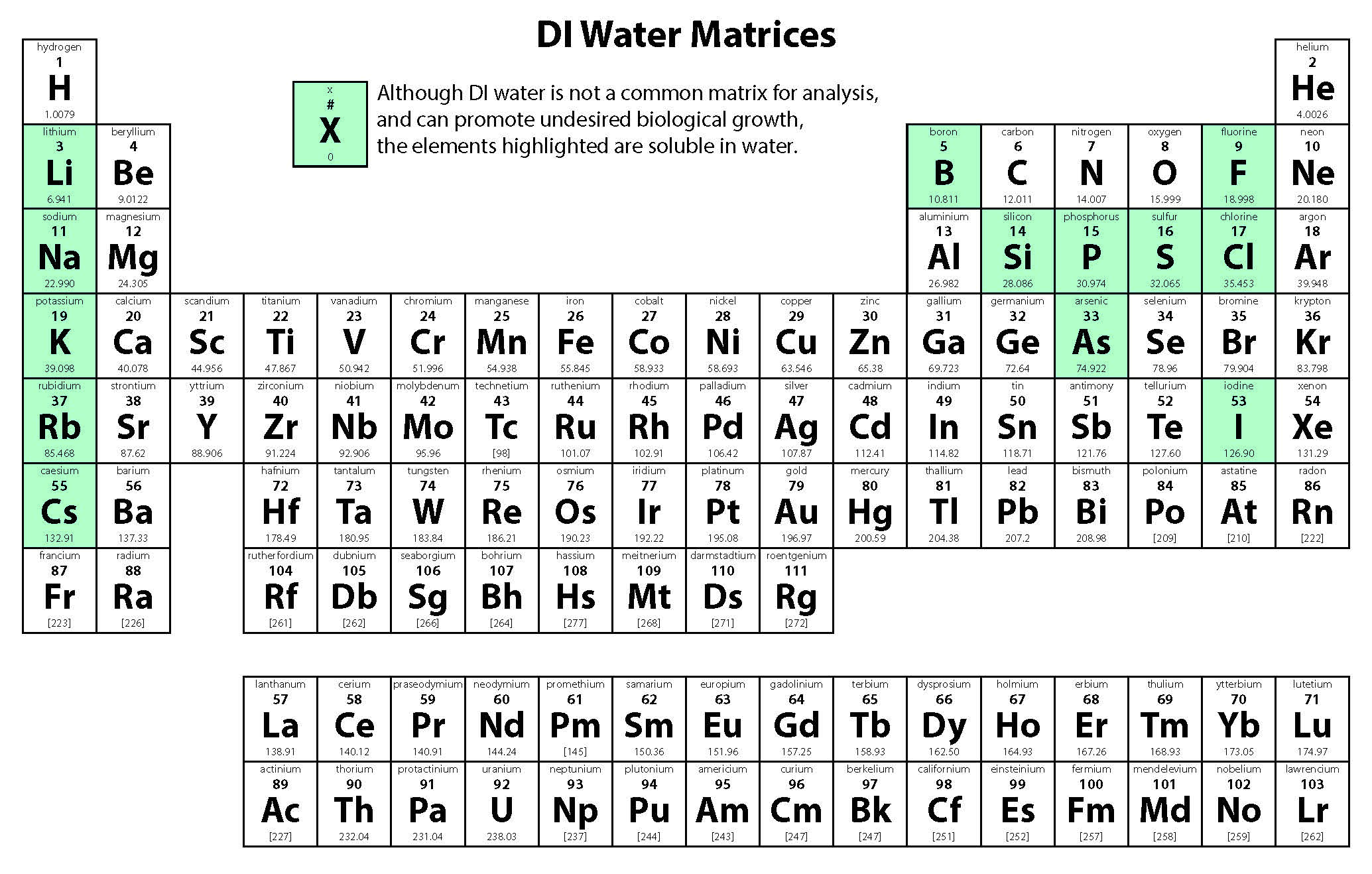
Best practice is to digest blanks (e.g., DI water) and reference materials (similar matrix as your samples) with each batch of samples. These will be analyzed as samples.
The methods provided below are commonly used digestion methods. However, we always encourage you to read the literature in your field and determine the best digestion method for your research questions. Nitric acid is listed in each procedure, but other acids may be more suitable as discussed in the Reagents section above.
Caution: during digestion, do not cap tubes tightly or they may explode from a buildup of vapors and gases.
Water Samples
Samples should be collected in acid-cleaned or metal-free containers (see above) since the containers may leach analytes into your sample.
For the analysis of dissolved analytes, the sample should be filtered through a 0.45 µm membrane filter. Acidify the filtrate with trace-metal grade nitric acid to pH<2 (but no greater than 10% acid by volume).
For the analysis of total recoverable elements in aqueous samples, do not filter. Acidify with trace-metal grade nitric acid to pH <2 (but no greater than 10% acid by volume). If you samples have high total dissolved solids you will need to add a heating step (2 hours at 90°C).
Samples with high salinity (e.g., seawater, biological buffers) cannot be analyzed undiluted because of the effects of high salt on the instruments. Please let us know if your samples are high salinity.
Cell Pellets
Cells should be washed to remove any metal-containing media or drug.
Sample tubes are pre-weighed, then weighed again after washed cells are added. 0.1 mL of concentrated, trace-metal grade nitric acid is added. The samples are heated for 2 hours at 90°C. The tubes are allowed to cool and 0.05 mL of trace-metal grade hydrogen peroxide (30%) is added. The samples are heated for an additional hour at 90°C. The sample is diluted to a final acid concentration of 2 – 5 % w/w with DI water and re-weighed.
Proteins
If your samples denature or are unstable at low pH they will need to be digested. An aliquot of protein solution is transferred to a pre-weighed tube and weighed again. 0.5 mL of concentrated, trace-metal grade nitric acid is added and allowed to react at room temperature overnight. The sample is then heated for 2 hours at 90°C. The sample is diluted to a final acid concentration of 2 – 5 % w/w with DI water and re-weighed.
Animal Soft Tissue
Weigh sample (0.2 – 0.5 g) into a pre-cleaned, pre-weighed sample tube. Add 0.5 mL of concentrated trace-metal grade nitric acid (or aqua regia). Heat the sample at 90°C for 2 hours. If particulates remain, add 0.25 mL trace-metal grade hydrogen peroxide and allow to react, then heat for an additional hour. Repeat until no precipitate remains. Dilute with deionized water to final acid strength of 2 – 5 % w/w and re-weigh.
Note: for nanoparticles in tissue, the selection of acids is critical to ensure complete dissolution of the NPs.
Plant material
Weigh 0.2 g of dry sample into a pre-cleaned, pre-weighed 50 mL plastic tube. Add 1 mL of trace-metal grade nitric acid. Allow to react overnight. Heat the sample at 90°C for 2 hours. Remove the sample from heat and allow the sample to cool. Add 0.5 mL of hydrogen peroxide and allow to react, then and heat for an additional hour. Repeat until no precipitate remains. Dilute to a final acid concentration of 2 – 5 % w/w with DI water and re-weigh.
Note: for woody plant tissue, more acid and peroxide may be needed.
Soil and sediment
Note: We do not digest with hydrofluoric acid so the following is a leach rather than a total digestion for most soil and sediment samples.
Weigh 0.25 g of dry sample into a pre-cleaned, pre-weighed 50 mL plastic tube. Add 5 mL of 8N nitric acid slowly. Let the sample react at room temperature for a minimum of 1 hour. Heat samples at 90°C for 30 minutes. Allow the sample to cool, add an additional 5 mL of nitric acid and heat for 30 minutes; repeat until no brown fumes are emitted from the sample. Heat the sample until all but 5 mL have evaporated, then allow to cool. Add 2 mL of DI water and 3 mL of trace-metal grade hydrogen peroxide and allow to react. Heat the sample until 5 mL remains. Dilute to a final acid concentration of 2 – 5 % w/w with DI water and re-weigh.
Note: We do not accept samples that contain HF. If you are using HF in your digest, please completely evaporate it before reconstituting your samples in nitric acid or HCl.